I know I’m a week late, but it was stated last Friday that the Ukrainian Air Force successfully shot down a second Beriev A-50 ‘Mainstay’ Airborne Warning and Control System (AWACS), the latest in a long string of aircraft losses in their 3-day special military operation in Ukraine.
Disclaimer: I’ve been working on this post for a week, but Ukraine won’t stop shooting down Russian fighter jets long enough for me to post it. As a matter of fact, they shot down another Su-34 as I was finishing up this post.
Beriev A-50U ‘Red-41’, in service with the Russian VKS
What is an AWACS?
In short, an Airborne Warning and Control System (AWACS) is a special plane with a big a** radar dome stuck on the top. They’re mounted on big airplanes like the Boeing E-3 Sentry (based on the old Boeing 707). Their radar monitors the airspace in a large area (hundreds of miles) for friendly and enemy aircraft, cruise missiles, and pretty much anything else in the sky (including birds).
How Did Ukraine Shoot It Down?
Dramatic footage shows a Russian A-50 early warning and control aircraft intercepted by several air defence missiles resulting in its destruction. pic.twitter.com/yw4NsgwyW9
At first, I figured this shootdown was the work of the mysterious roaming Patriot battery near the front lines that keeps downing Russian jets, but it is reported that it was actually an ancient Soviet S200 SAM system. I’m totally speculating here, but here’s what I think happened:
Ukraine strikes air defense radar installations along and near the frontlines. In order to try to maintain their aviation operations, the Russians call their A-50 forward to augment the radar coverage. Ukraine then takes the opportunity to take out the A-50.
If this is actually accurate, it poses the question: what will Russia do next? Will they bring another A-50 to the front lines and risk losing another one? I guess only time will tell.
Why Is This Shootdown So Important?
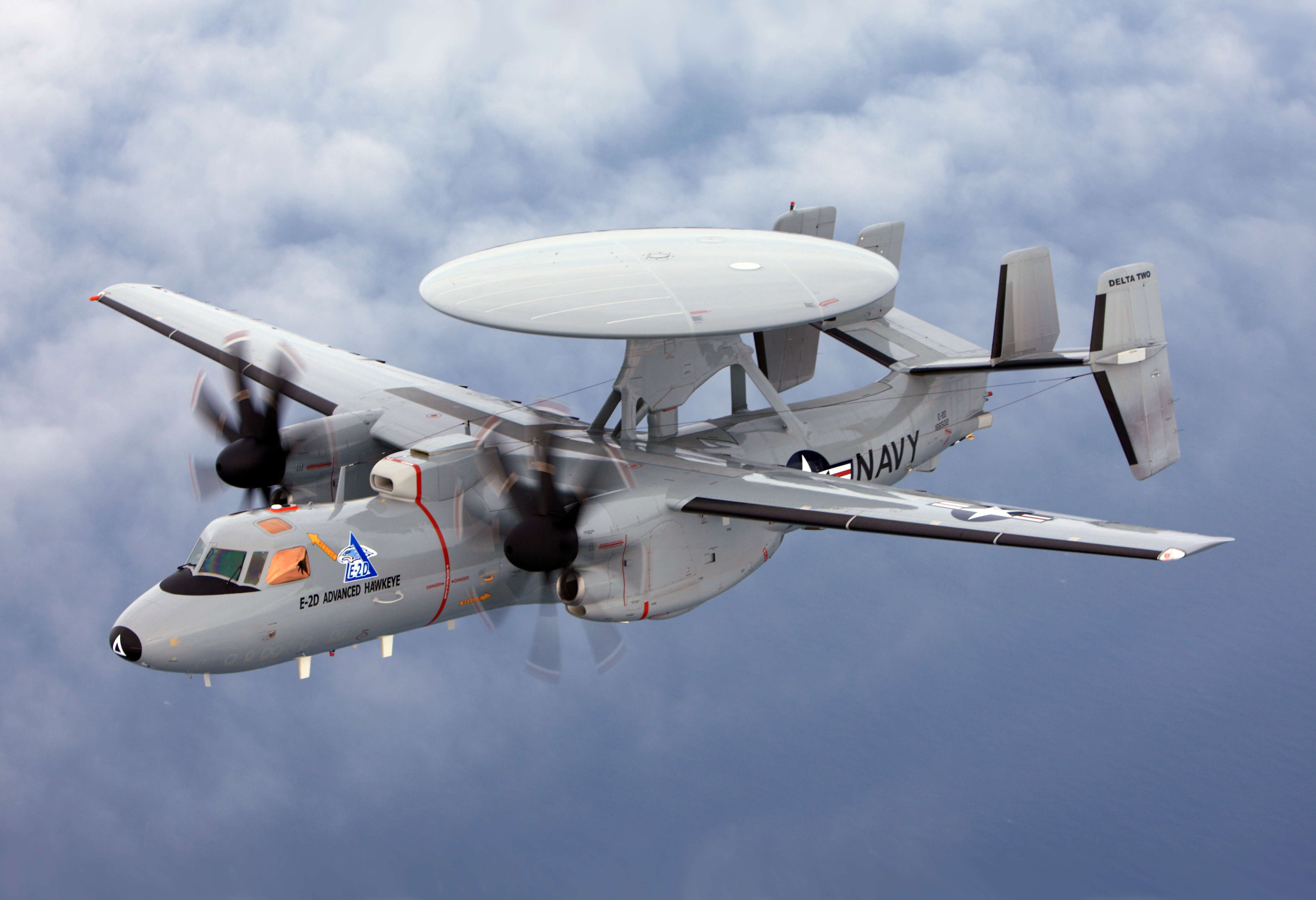
In short, this is a really special airplane. Russia had 9 in pre-war service. Now they have 7, assuming all 9 were originally operational. To put that in perspective, the US Air Force has 31 E-3 Sentry AWACS in its fleet (with NATO having an additional 17), and the Navy has 55 of the smaller carrier-based E-2 Hawkeye AWACS. (Not to mention the incoming E-7 Wedgetails).
A US Air Force Boeing E-3 SentryA US Navy E-2 Hawkeye
The A-50 is based on the Ilyushin Il-96 strategic airlifter. The Il-96 is still being manufactured, but it is unclear if the A-50 is still being made. If not, it’s unlikely that production lines could be started in time to replace these losses. So unless India will sell them one of theirs, they might just be out of luck.
Nuclear War
I’m working on a post about the risks of Russia using nuclear weapons in Ukraine, and why they won’t. Hopefully I’ll have that done soon.
I didn’t think I’d ever be writing a blog post about Taylor Swift. I was recently asked by a Swiftie who knows my love of aviation and solving weird problems if Taylor Swift can make it from her concert in Tokyo back to Las Vegas to cheer on Travis Kelce and the Kansas City Chiefs in the Super Bowl.
I am going to have to make some assumptions in order to make this math possible; those will be noted below.
So, here we go. This will be fun.
The Problem
Taylor is still on her record-smashing ‘Eras’ world tour. She has a show at the Tokyo Dome on Saturday, February 10th at 6:00pm Tokyo time (1:00am Las Vegas time). Her show runs approximately 3 hours and 15 minutes. I will assume that the show starts on time at 6:00pm and lasts for 3 hours and 15 minutes.
Current Time Tracker: 9:15pm JST / 4:15am PST (37 hours to kickoff)
Step 1: Tokyo Dome to Airport
Tokyo has 2 main airports- Haneda and Narita. Narita is approximately 1 hour from the Tokyo Dome while Haneda is much closer at 36 minutes.
Transportation Map to Haneda and Narita airports from the Tokyo Dome
I am going to assume that she will use Haneda airport for this flight and increasing the travel time to 45 minutes for simplicity of math.
She’ll be flying private, so she won’t have to go through security or any of the other airport niceties that us plebians deal with every time we fly. Her pilots should have her plane fueled up, walk around done, pre-flight checks done, navigation system programmed, and ready to push and start when she arrives. That being said, it’s still going to take some time to load persons and baggage, get final clearances and to taxi, so I’m going to use 11:30pm as a departure time.
Current Time Tracker: 11:30pm JST / 6:30am PST (35 hours to kickoff)
Step 2: Narita Airport to Harry Reid Airport
The Airplanes
Taylor has 2 airplanes: A Dassault Falcon 7X and a Dassault Falcon 900. Both aircraft are trijets, meaning they have three engines instead of the usual two found on private jets.
The Falcon 900 has a range of 4,000 nautical miles (nm) with a cruise speed of Mach 0.85 (510kts (knots)/590mph). On the other hand, the 7X has a range of 5,950nm and a cruise speed of Mach 0.8 (459kts/528mph).
NOTE: Taylor Swift sold her Falcon 900 on January 30th, 2024- after I started writing this post. She wasn’t going to be able to use it here anyway so I’m going to keep it in for fun.
The Route
There are a few routes that airplanes can take between Haneda International Airport (ICAO code: RJTT) and Harry Reid International Airport in Las Vegas (ICAO code: KLAS). I’m going to assume they use the following route with a distance of 4,972nm.
NOTE: RJOO and KPHX are shown on the map as they are alternate airports and not included in the 4,972nm.
Given that distance, Taylor will have to use her Falcon 7X, allowing her to cruise at Mach 0.8. That means the trip will take approximately 10 hours and 25 minutes, depending on winds and any required changes in routing and required holds over KLAS. I’m going to say 11 hours travel time to be safe.
Current Time Tracker: 5:30pm PST (24 hours to kickoff)
Step 3: On the Ground at Harry Ried
The biggest problem of the trip so far is something we have all dealt with before- parking. In her case, parking for her Falcon 7X- not like the Dodge Durangos and Buick LaCrosses (or full-size pickups) that you and I deal with parking in metro areas. There are approximately 475 parking spaces in all of the Las Vegas-area airports. As far as I can find, all 475 of those spots are already booked for the weekend. It is possible that Taylor has already booked one of these 475 spots, in which case this section can be disregarded.
Las Vegas-area sectional chart. Public airports are labeled in green.
She will also need a landing slot. The NFL works closely with the FAA and the local airports, so they almost certainly have the pull to guarantee her a place to land, but possibly not a place to park. I am going to assume that she will land at Harry Ried International Airport as it is the main airport for Las Vegas and is closest to Allegiant Stadium.
LIV Golf has a Golf Tournament at the Las Vegas Country Club that concludes on Saturday, so it is possible that some of the spots could become available if there are golfers in attendance who aren’t football fans and would rather get out of town.
KLAS Airport Diagram. Most private parking is on the left side of the diagram, by the FBOs (Fixed-Base Operators) circled in red.
If she can’t find a parking spot (who among us hasn’t been in that situation), she could do a ‘drop-and-go’ flight, which is exactly what it sounds like. Taylor and her entourage would be ‘dropped’ at Harry Ried Airport and her pilots and plane would ‘go’ and park somewhere else outside of the Las Vegas area.
I’m going to assume that it will take an hour on the ground at Harry Ried.
Current Time Tracker: 6:30pm PST (23 hours to kickoff)
Step 4: Harry Ried to Allegiant Stadium
Taylor obviously won’t be going straight to Allegiant Stadium if she arrives 23 hours before kickoff, but for posterity, it should take 10 minutes on a normal day to get from Harry Ried to Allegiant Stadium. I’ll estimate 30 minutes here to account for extra activity in preparation for the Super Bowl.
Harry Ried International Airport (KLAS) to Allegiant Stadium
Final Time Tracker: 7:00pm PST (22.5 hours to kickoff)
Conclusion
So, yes. Thanks to the magic of the International Date Line, Taylor Swift will make it to Las Vegas with plenty of time for a good night’s rest before the big game and have plenty of energy to celebrate the Chiefs’ (hopeful) win afterward.
To the person who asked- thanks for the question, that was a lot of fun to figure out. If you have more weird aviation or travel problems you want me to tackle, contact me!
The US says it will allow its Western allies to supply Ukraine with advanced fighter jets, including American-made F-16s, in a major boost for Kyiv.
Jonathan Beale, BBC
America and its allies plan to provide F-16s to Ukraine — although the fighter jets may not necessarily come directly from the United States — as part of a long-term effort to strengthen the country’s security, a senior Biden administration official said Friday.
Peter Alexander and Rose Horowitch, NBC News
Over the next few weeks, the US and partner nations will launch a joint training program in Europe in which Ukrainian pilots will learn how to operate fourth-generation fighter jets, like the US-made F-16, a senior Biden administration official told Breaking Defense.
Ashley Roque, Breaking Defense
So that means the war is over and Ukraine is going to run a ‘reverse Desert Storm’ air campaign and drive out the Russians, right?
Hopefully you could detect the sarcasm through text in that previous paragraph. No, this isn’t going to end the war. No, Ukraine isn’t going to become the US Air Force. But they can definitely make a big difference. How? Let’s talk about it.
NOTE: I have some TL;DRs (Too long; didn’t read) if you want to skip some of my nerd spiraling. They’re in these blue boxes.
Back to the Soviet Union
I’ll try to not get too far down the historical rabbit hole here, but any discussion of eastern air strategy has to start with the Soviet Union. Knowing that they were outmatched by NATO in the air, the Soviets decided to invest heavily in developing Ground-Based Air Defense (GBAD) systems. The Soviet Union (and now Russia) has always been the king of the air defense market. They are one of the few countries who can supply a full-service Integrated Air Defense System (IADS)- S-300 and S-400 for strategic and long-range targets, mobile BUKs, Tors, and Pantsirs for short and medium-range targets, and Strela MANPADS (Manned Portable Air Defense Systems) to be carried by light infantry. The S-300 and S-400 are considered to be some of the most potent air defense systems in the world. NATO countries (*cough*Turkey*cough*) have taken delivery of S-400 systems even though that decision resulted in its being kicked out of the F-35 JSF (joint strike fighter) program.
None of the focus on GBAD is to say that the USSR didn’t have a large air force. It did. At the time of the Soviet Union’s collapse, they had more airframes in service than the United States Air Force currently does. Big, however, does not equal effective in every combat environment. The Soviet Air Force was not designed to be an equal to the United States Strategic Air Command (SAC). It consisted heavily of long-range strategic bombers intended for nuclear strike missions, and in naval aviation using long-range cruise missiles designed to sink NATO aircraft carriers.
When the USSR broke up, Russia got to keep a majority of the Soviet pilots, but not aircraft- the aircraft were distributed across the multiple former Soviet republics. Yes, Russia did negotiate the purchase or return of many aircraft back to Russia, but the air force available to them was still designed to start and then survive a nuclear apocalypse, not win dogfights or provide close battlefield support.
I could talk about the cash infusion of the early 2000s or the reorganization to the current VKS (Vozdushno-kosmicheskiye sily) in 2015, but that’s not what this post is meant to be about.
Modern Air Doctrine
Anyone who has seen Top Gun might think that all fighter jets do is dogfight other fighter jets in dramatic close-range combat using their cannons. The reality is that this is almost never the case. Almost all of modern air-to-air kills have been done beyond visual range (BVR) with guided missiles, or are attacks on ground targets with air-to-ground missiles and guided bombs. So yeah, a realistic Top Gun would be pretty dang boring.
Air Superiority/Supremacy (And why no one has achieved it yet)
What are Air Superiority and Air Supremacy?
Well, they are what they sound like- ruling the airspace above a combat zone.
The official definitions according to the U.S. Department of Defense are:
Air Supremacy: “degree of air superiority wherein the opposing air force is incapable of effective interference.”
Air Superiority: “degree of dominance in [an] air battle … that permits the conduct of operations by [one side] and its related land, sea and air forces at a given time and place without prohibitive interference by opposing air forces.”
Operation Desert Storm
Famously, during Desert Storm, the US and coalition forces quickly commanded air near-total superiority over Iraq with a large cruise missile and air campaign- Hellfire missiles and 70mm rockets launched from AH-64 Apaches on key radar installations, Tomahawk cruise missiles launched from the USS Missouri and USS Wisconsin, F-117 Nighthawk stealth bombers dropping Paveway laser-guided bombs on Baghdad, AGM-86 cruise missiles launched from B-52s at power plants and communications sites, air defenses struck by F-4G Wild Weasels, US Navy A-6 Intruders launching decoy glider drones toward Baghdad, lighting up the radars for US Navy F/A-18 Hornets armed with High-speed Anti-Radiation Missiles (HARMS) to destroy, and ground targets and airfields struck by many other fighter aircraft, and a whole lot more.
I could go on and on about the masterpiece that is the Desert Storm air campaign, but I’m here to talk about Ukraine.
How to Achieve Air Superiority
One big component of achieving air superiority is Suppression of Enemy Air Defense (SEAD) missions. SEAD missions are interesting because their objective is for aircraft to find and destroy the things whose very purpose is to find and destroy them. They are also a huge part of any air supremacy campaign. They require specially-trained pilots in special aircraft, and even then are still incredibly dangerous.
The other big component is pretty simple- destroy all the enemy’s aircraft. They will have a hard time contesting their airspace without any aircraft with which to fly.
A lot of people in the west (myself included) thought that Russia would launch their invasion with an air campaign similar to Desert Storm or Iraq II’s ‘shock and awe.’ And sure, Russia did launch their own air campaign. But instead of radar installations and communications centers, their cruise missile targets seemed to be random airports and empty fields. Their SEAD missions were flown by untrained pilots in unsuitable aircraft, rendering them ineffective.
In fairness to Russia, the lack of accurate targeting could come down to the FSB’s faulty intelligence reports.
So why hasn’t either side achieved air superiority?
It’s an interesting result of both countries having been one country relatively recently. The Soviet Union’s focus on air defense has determined both sides doctrine. Ukraine has a very potent air defense network that Russia failed to destroy during their opening assault. Russia’s air forces are still largely ineffective, only launching standoff munitions from far behind their own frontlines.
On the other side, Ukraine doesn’t have the air force to achieve their own air superiority. Their GBAD network and small fleet of fighters can keep the airspace contested, but aren’t enough to achieve superiority.
TL;DR: Air superiority is controlling the airspace above a combat zone. Neither side has achieved it because the Russian VKS sucks and Ukraine’s air defense doesn’t.
Ukraine’s Air Force
The Ukrainian Air Force’s fleet is currently comprised of Soviet-built aircraft produced before the collapse of the Soviet Union in 1991.
The F-16 ‘Fighting Falcon’ (also commonly called the ‘Viper’) is a multirole and air superiority fighter built by General Dynamics (now Lockheed Martin) starting in 1974. It has a top speed of Mach 1.7+ (1,319 mph, depending on configuration) with a service ceiling of 50,000+ feet. For armaments, the F-16 has an integrated M-61A1 20mm multibarrel cannon and 11 external hardpoints allowing it to carry a variety of weapons including air-to-air missiles like the AIM-9X Sidewinder or AIM-120 AMRAAM, air-to-ground missiles such as the AGM-88 HARM, anti-ship missiles like the AGM-84 Harpoon, several types of bombs including the GBU-27 Paveway III, and even B61 and B83 tactical nuclear weapons (and no, we aren’t going to give tactical nukes to Ukraine). The hardpoints can also carry external fuel tanks to expand the stock 7,000 lb fuel capacity to 12,000 lbs.
TL;DR: It’s a very capable and flexible platform. Please excuse my nerding out.
Why does Ukraine want F-16s?
The answer to this question might seem obvious at first- American fighter jets good, Russian fighter jets bad or broken. But it isn’t that simple.
Several members of the Ukrainian parliament said that they wanted F-16s because of their powerful radars that can locate ground targets up to 500 miles away. This is far beyond the capabilities of the existing Ukrainian Air Force.
The planes can also play a part of Ukraine’s air defense network- shooting down missiles, drones, and aircraft, saving Patriot or S-300 surface to air missiles (SAMs).
The F-16 can also provide close air support for ground troops. The term close air support is frequently used with the venerable A-10 Warthog or the AH-64 Apache, but the F-16 is also capable of providing precision close air support. This ability can play a large role in future Ukrainian offensives.
Another offensive capability is providing deep fires- striking targets deep within Russian occupied territory without leaving safe Ukrainian airspace. This allows Ukraine to strike Russian command and control posts, supply depots, logistic bases, and other military targets as far away as occupied Crimea and the Black Sea.
How Will Russia Respond?
They’ll nuke us, obviously. I mean, they put their nuclear forces on ‘high combat alert’ (the equivalent of the US raising their DEFCON) on February 27th 2022, 3 days after the invasion started. And they threatened to nuke in April of 2022 if they provided weapons to Ukraine. And again in June 2022 after the arrival of the US M777 Howitzers and the announcement of HIMARS. In September, Russia threatened the west with retaliation if they provided longer-range missiles to Ukraine (US ATACMS, British Storm Shadows, etc), saying that they would be a ‘party to conflict.’ They again warned of ‘consequences’ in December 2022 if the US sends Patriot Missiles. In February 2023, Putin warned the west about sending modern tanks. And that brings us to today. Clearly, the entire western world is a nuclear wasteland, right? Because the west provided all of those things to Ukraine. (In fairness, the US never provided ATACMS, but the British provided Storm Shadows and the French provided SCALPs).
TL;DR: “We will nuke you if…” – Help Ukraine at all (Feb 2022) – Send artillery (Apr 2022) – Send HIMARS (Jun 2022) – Send long-range missiles (Sept 2022) – Send the Patriot System (Dec 2022) – Send modern tanks (Feb 2023) – Send F-16s (May 2023)
Again, hopefully you picked up on the sarcasm. Russia didn’t use nuclear weapons against the west despite our crossing all of their ‘red lines.’ And I’m confident that they won’t. If people are interested, I can make a whole post about why I don’t think Putin will use nuclear weapons. If you want my thoughts on that, leave a comment on this post or check out my Contact Page.
Will F-16s Make a Difference?
Definitely. The exact way Ukraine with utilize them is still unknown, but their capabilities and the Ukrainians’ ability and motivation to quickly learn new advanced western weapons systems leaves little doubt in my mind that the F-16 will be put to good use.
The End?
This post was way longer than I thought it would be. Thanks for sticking around and making it this far; it means a lot to me. I’d love to hear your thoughts and questions. Check out my Contact Page for my Twitter and email or comment on this post; I’d love to talk with you.