


I’ve seen a lot of questions being asked about the ‘Chinese Spy Balloon’ (referred to as CSB going forward to avoid typing ‘Chinese Spy Balloon’ over and over again) and a lot of misinformation being spread. So, let’s talk about it. Facts here will be sourced, along with my informed speculation based on my knowledge of aviation and conversations I have had with those who operate in the national security sphere. Note that as a citizen, I will also be using ‘we/us’ interchangeably with ‘The United States.’
Notice:
This post will focus on the original ‘Chinese Spy Balloon’ that was traversed North America in late January and early February. For the recent incidents, I have also added an ‘Additional Balloons/Objects’ and ‘What the hell is going on here?’ sections to the bottom of the post.
I have gone through several delays in publishing this post as more information has come out. If there are any major updates to the publicly available information, I will update this post and re-share it on social media.

By Russotp – Own work, CC BY-SA 4.0
What is the CSB and where did it come from?
What is the CSB?
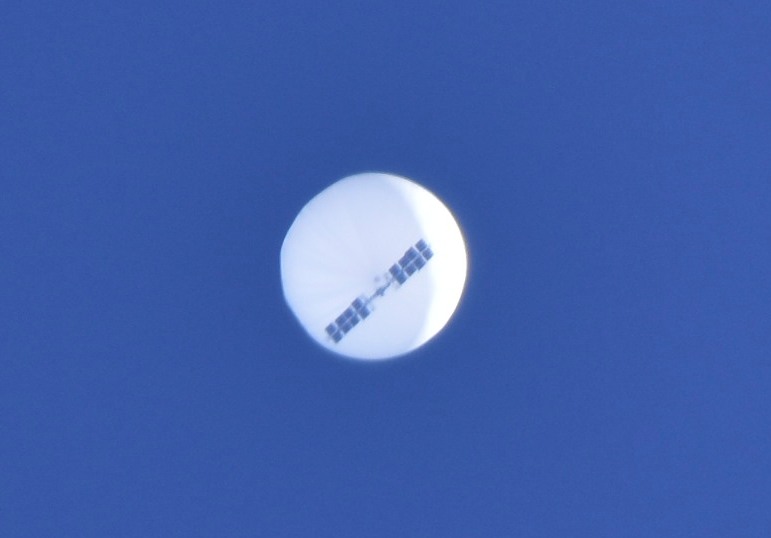
According to the CCP (Chinese Communist Party), it’s an errant weather balloon. The US says it’s a spy balloon. I trust the CCP about as much as I trust week-old room-temperature gas station sushi, so we can be pretty confident it isn’t just a weather balloon. So what is it really? We don’t know. Here’s what we do know about it. It’s a high-altitude balloon that can carry a large payload. It’s big. Here’s a graphic comparing it to everyday things, such as a human, the Statue of Liberty, or the F-22 Raptor that shot it down.


Where did the CSB come from?
Well, China. We don’t know where. This map is the estimation of its track across the world. It appears to have first entered American airspace in Alaska on January 28th, passing over Canada, and crossing into US territory over the state of Idaho on January 31st. NORAD (North American Aerospace Defense Command) and U.S. Northern Command tracked the balloon after it entered American and Canadian airspace.


It was then spotted over Montana on February 1st, which is home to multiple U.S. Military installations and Minuteman nuclear missile silos. This is obviously concerning.
[The balloon] generally followed jet stream patterns, the official said, except when it stopped to loiter near sensitive sites, such as Malmstrom Air Force Base, undercutting Chinese assertions that the balloon is a wayward device.
Unnamed Defense Official cited by The Washington Post
What were the balloon’s capabilities?
We do have some information here, courtesy of the US Department of Defense and State Department. According to them, the balloon had a ‘signals intelligence array,’ in other words, a big antenna that can track and listen into communications devices. They haven’t said what it was trying to collect- military communications, civilian communications from ordinary mobile phones, or something else entirely. More will be known (and hopefully released, but probably not) as the wreckage is recovered.
Is the wreckage being recovered?
Yes. The US Navy, Coast Guard, FBI Counterintelligence Agents, and Navy Divers have been working to recover debris. Vessels deployed to retrieve the wreckage include the guided-missile destroyer USS Oscar Austin, guided-missile cruiser USS Philippine Sea, and dock landing ship USS Carter Hall. Debris already captured has been sent to the FBI lab in Quantico, VA for analysis by the FBI’s Operational Technology Division. China says it wants the debris back, but the US is obviously not going to consider that request anytime soon.


Why did we wait so long to shoot it down?
There are 2 main reasons given for why we did not immediately shoot the CSB down- Risk to the population on the ground and ability to gather intelligence. The Air Force worked with NASA to determine a debris field, which was projected to be approximately 7 miles spread out. The balloon was also at an altitude of ~60,000ft, well above the altitudes that civilian airplanes fly at.
President Biden gave his authorization to take down the Chinese surveillance balloon as soon as the mission could be accomplished without undue risk to U.S. civilians under the balloon’s path.Military commanders determined that there was undue risk of debris causing harm to civilians while the balloon was over land. As a result, they developed a plan to down the balloon once it was over water in U.S. territorial airspace.
—
I would also note that while we took all necessary steps to protect against the PRC surveillance balloon’s collection of sensitive information, the surveillance balloon’s overflight of U.S. territory was of intelligence value to us. I can’t go into more detail, but we were able to study and scrutinize the balloon and its equipment, which has been valuable.
Senior Defense Official from an off-camera, on-record press briefing
HOw did we gather intelligence?
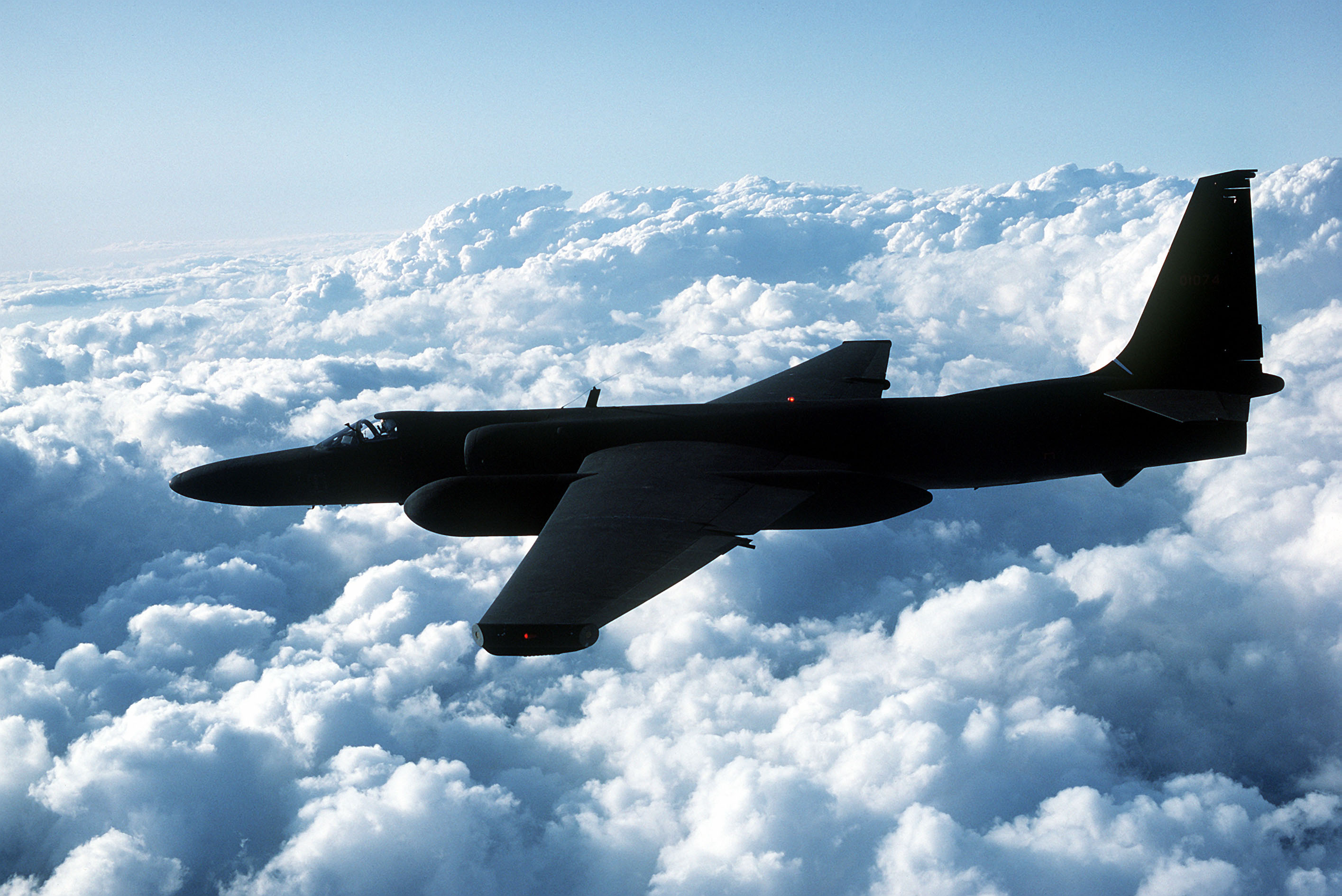
This part is very cool. According to reports, we used Boeing E-3 Sentry AWACS (Airborne Early Warning and Control System, a Boeing RC-135 reconnaissance aircraft, and the F-22 Raptor (that ultimately shot it down) to track the balloon’s movements. U-2S reconnaissance aircraft were also used to surveil the balloon above the US. The U-2S’s high service ceiling (70,000 ft) allowed it to get far closer to the balloon than other aircraft. This would allow the U-2S’s advanced electronic warfare suite to jam or monitor radio transmissions from the balloon, including with Chinese satellites. The U-2 really deserves a post of its own someday as there is a fascinating story behind its development.

All About the Shoot Down
If I’m honest, this is what I am really excited to write about and where the majority of my knowledge lies. So away we go.


By Russotp – Own work, CC BY-SA 4.0

Courtesy of Mark Hasara, ret. USAF Air Tanker pilot.
I used this video because Mark calls out the correct weapons callouts (Arms Hot, Fox 2) over the video. If you are interested in aviation or defense, I highly recommend following him on TikTok @markhasara.
The CSB was shot down off the coast of South Carolina on February 4th. At 60,000 feet, the US would have used a dedicated ‘Air Superiority Fighter’ to perform the shootdown. The Air Force has 2 Air Superiority Fighters- the F-15 Eagle and F-22 Raptor.


My initial assumption upon hearing that an operation to down the balloon was underway is that F-15s would be used. Their ceiling (max altitude) is 65,000 feet whereas the Raptor’s official published ceiling is ‘50,000+ feet,’ and the US Air Force has 226 F-15 Eagles in active service compared to only 187 F-22 Raptors. The F-15s are also stationed at far more Air Force Bases across the country. Ultimately, the F-22 was chosen to down the balloon.
“…the F-22 versus the F-15 is like having two Football Teams against each other and one of them [the Raptor] is invisible.”
Mike ‘Dozer’ Shower, F-15 Eagle and F-22 Raptor Pilot
I don’t know why the F-22 was chosen for this mission over the F-15, but I’m glad it was. The F-22 is one of the coolest aircraft in service anywhere on the planet. It is a ‘Stealth Air Superiority Fighter,’ and one of the few military aircraft that cannot be exported to foreign militaries due to its sensitive stealth technology.
The F-22 that fired the missile was from Langley Air Force Base (now part of Joint Base Langley-Eustis) in Hampton, VA (for simplicity I am going to refer to Joint Base Langley-Eustis as Langley AFB). Langley AFB is home to both the 27th Fighter Squadron and 94th Fighter Squadron, both of which operate the F-22 raptor with tail designations ‘FF’.
All aircraft in the skies have callsigns. The Raptors on the shootdown mission had callsigns ‘FRANK01’ and ‘FRANK02.’ While at first glance this may seem insignificant, the ‘FRANK’ callsign is a nod to Frank Luke Jr, a World War I fighter ace known as the ‘Arizona Balloon Buster,” having downed 14 German surveillance balloons.


The F-22 used an AIM-9X ‘Sidewinder’ Air to Air Missile to down the CSB. The AIM-9 first entered service in 1956. So yeah, we shot down China’s fancy balloon with a missile that first entered service in the ’50s. In fairness, the ‘-9X’ variant entered service in 2003, featuring upgraded infrared imaging capabilities and compatibility with the U.S Joint Helmet Mounted Cueing System, and a new two-axis thrust-vectoring control system. In plain English, it’s faster, more accurate, and more maneuverable than previous variations. As an Air-to-Air missile, it is classified as a ‘Fox 2’ missile.


By David Monniaux modified by FOX 52 – File:AIM 9L Sidewinder
Details about the F-22 Raptor

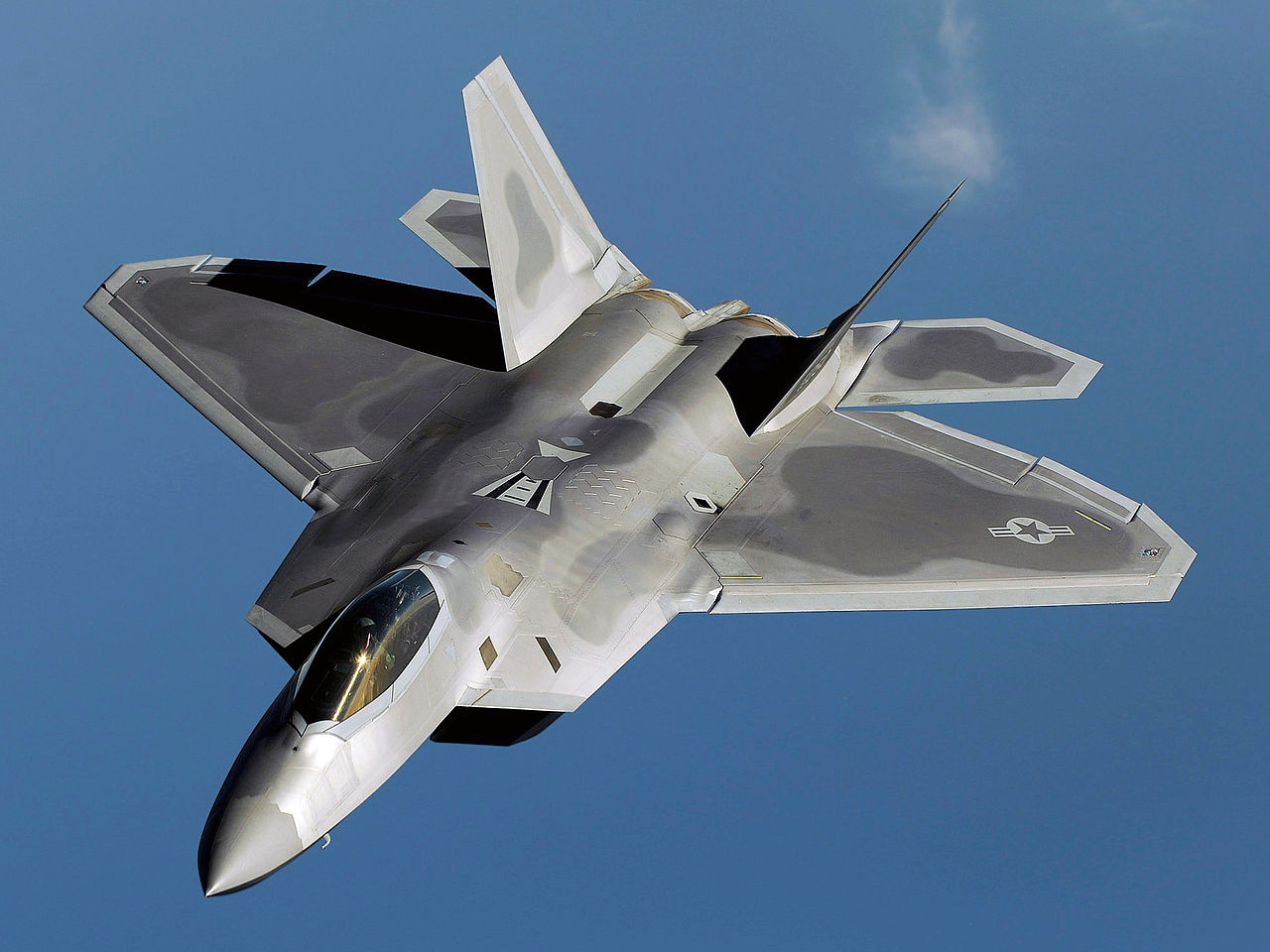
An F-22 Raptor flies over Kadena Air Base, Japan, Jan. 23, 2009, on a routine training mission
A lot about the F-22 Raptor is classified. Here are some facts about the Raptor courtesy of manufacturer Lockheed Martin.
- Length: 62ft
- Height: 16.67ft
- Wingspan: 44.5ft
- Wing Area: 840sq ft
- Horizontal Tail Span: 29ft
- Engines: 2x Pratt & Whitney F119 augmented turbofan
- Engine Thrust: 35,000lb
- Service Ceiling: 50,000+ ft
- Max Speed: Mach 1.8 (Mach 2+ when using reheats [afterburners])
The Raptor is a seriously cool airplane. Its first Combat Strike was on September 22nd, 2014, conducting the opening strikes over Syria during Operation Inherent Resolve. Raptors dropped 1,000-pound GPS-guided bombs on ISIL targets near the Tishrin Dam during the initial strike and dropping 270+ bombs at 60 locations over the coming months. While primarily being used for intelligence, surveillance, and reconnaissance (ISTAR) during Operation Inherent Resolve, they were also used to defeat pro-Assad and Russian Wagner Group mercenaries near Khasham, Syria and performing close air support operations throughout the operation.
What makes the Raptor so special and why am I so excited that it was used?
To be short, its stealth characteristics. Very little is known about the actual stealth capabilities of the aircraft. The purpose of ‘stealth’ in aircraft design is to minimize visibility of the aircraft on radar. Without going in to too much detail, here’s a quick overview of what stealth is:
While at this time, it is not possible to make an aircraft totally invisible to radar, technology can be used to reduce its ‘radar cross section.’ A ‘radar cross section’ or ‘radar signature’ is how visible a target is on a radar scope, with larger radar cross sections meaning easier detection. Stealth is often achieved through design (physical shape of the aircraft) and using radar-absorbing materials to coat the aircraft, as well as other technologies that we aren’t allowed to know about.
To maintain stealth, the F-22 keeps its armaments (weapons) in internal weapons bays, whereas earlier-generation Air Superiority fighters like the F-15 keep their weapons on hardpoints on the wings.


The Raptor CAN carry external fuel tanks and weapons if necessary, but in deployments where maintaining stealth is necessary, only the inboard weapons bays are used.
The weapons bay can hold AIM-120 AMRAAM (Advanced Medium Range Air-to Air Missile), AIM-9 Sidewinder, and (soon) AIM-260 JTAM (Joint Advanced Tactical Missile, a ‘Beyond Visual Range Air-to-Air Missile’) missiles. The main armaments bay was designed for air-to-air missiles but can also be fitted with two racks to carry air-to-surface ordnances- one 1,000lb or four 250lb bombs, totaling 2,000lbs of air-to-surface ordnance. Up until the shootdown of the balloon, the primary armaments of the Raptor were air-to-surface ordnances (bombs).
Additional Balloons/OBJECTS
South America
On February 3rd, a second Chinese surveillance balloon was reported flying over Latin America. The Costa Rican General Directorate of Civil Aviation confirmed that an object “not of Costa Rican Origin” had breached its airspace. The Colombian Air Force tracked an object “with characteristics similar to those of a balloon” at 55,000ft moving at 25 knots (29 miles per hour). The Colombian government did not determine it was a threat to national security and defense or air safety.
On February 6th, Mao Ning, a CCP spokeswoman, confirmed the balloon belonged to China, but said it was used for “flight tests” and was blown off course like the one spotted and shot down over North America. Yeah, they’re really trying that excuse again.
Alaska
On February 10th, the US Military shot down another ‘High-Altitude Object’ over Alaska, reportedly at 40,000ft. The US does not know who owns the object, and spokesman John Kirby said he would not call it a balloon. This object was also shot down by a F-22 Raptor with an AIM-9X missile, becoming the Raptor’s 2nd air-to-air kill.
“The object was flying at an altitude of 40,000 feet and posed a reasonable threat to the safety of civilian flight … Out of an abundance of caution, and at the recommendation of the Pentagon, President Biden ordered the military to down the object and they did and it came inside our territorial waters and those waters right now are frozen.”
Pentagon Spokesman John Kirby
Canada
One day later, on February 11th, an ‘unidentified object that violated Canadian airspace’ was shot down by a US F-22 Raptor under the command of NORAD (North American Aerospace Defense Command), Canadian Prime Minister Justin Trudeau tweeted. According to Brig. Gen. Pat Ryder, a Pentagon spokesman, NORAD detected the high-altitude object late Friday evening. Two F-22 aircraft monitored the object over Alaska, and Canadian aircraft joined as the object crossed into Canadian airspace. After speaking with Prime Minister Trudeau, President Biden authorized the takedown of the high-altitude object. A US F-22 shot it down with a AIM-9X missile, marking the Raptor’s 3rd air-to-air kill.
“…the unidentified, unmanned object” be taken down “out of an abundance of caution and at the recommendation of their militaries”
White House readout of the call between PM Justin Trudeau and Pres. Joe Biden
As Canadian authorities conduct recovery operations to help our countries learn more about the object, the Federal Bureau of Investigation will be working closely with the Royal Canadian Mounted Police.
Brig. Gen. Pat Ryder, US Pentagon Spokesman
This news is breaking as I am writing this, so more will hopefully be known in the coming days.
Why did A US AIRCRAFT shoot down an object in Canadian airspace?
Good question. The request came from NORAD, the North American Aerospace Defense Command. While most famous for tracking Santa on Christmas Eve, NORAD is responsible for ‘aerospace warning, air sovereignty, and protection’ for Canada and the Continental United States. Think of it as ‘two countries, one team.’ The F-22 has vastly superior air-to-air capabilities than the Canadian CF-18 (Canada’s version of the F/A-18 Hornet) and had already been shadowing the object since it was over Alaska, so it was used for the shoot down mission.


Montana
As I was preparing to hit ‘publish’ on this post, news broke that the FAA issued a TFR (closed some airspace) over Montana for Defense Department activities. Some reports have indicated that the Air Force is tracking another object over Montana. The airspace has since reopened with a statement that “Department of Defense activities will resume in the morning.” In my view, the Air Force is waiting for daylight to shoot down the object. Why? Finding debris and coordination with civilians is easier during the daytime.
So what the hell is going on here?
No idea. Only time will tell what the objects over Alaska, Canada, and now Montana are. If it’s anything interesting, I’ll make a new post, but for now, let’s just watch those F-22 Raptors at work. If I can find an Air Force Base that will let me get some pictures with one, you’ll be the first to know.